In the latest webinar from Briotix Health, we explored the foundational pillars of prioritizing care: ergonomics, early intervention, wellness, education, supervisory support, and data-driven monitoring. These pillars form the backbone of a culture of safety and productivity.
The pillars, Ergonomics, Early Intervention, Health and Wellness, Education and Training, and Supervisory Support, are the basis of any good safety program. You can learn more about how proper care improves the quality of any workplace in this blog from Briotix Health.
However, knowing the pillars is just the beginning of developing a high quality of care in the workplace. The real challenge and opportunities come with implementation. How do you move from strategy to action?
The answer lies in blending practical and intelligent solutions.
- Practical solutions are the boots-on-the-ground tactics that are simple, accessible, and often immediately impactful. For example, walkthroughs, stretch programs, or suggestion boxes.
- Strategic solutions are strategic and data-driven solutions that take into account actual effects and outcomes of programs. They include assessments, analytics, and technology-enabled tools that scale programs, sustain improvements, and align efforts with long-term goals.
These approaches are not mutually exclusive. In fact, they work best together. Practical solutions build momentum and engage your workforce, while intelligent solutions ensure your efforts are targeted, measurable, and sustainable.
Jump to section:
- Ergonomics
- Early Intervention
- Wellness
- Education and Training
- Supervisory Support
- Data-Driven Monitoring
.jpg?width=800&height=500&name=Industrial%20sports%20medicine%20professional%20moving%20pallet%20jack%20(1).jpg)
1. Ergonomics: Creating Comfortable, Efficient Workspace
Identifying and applying solutions across any number of workplaces is easier with the right tools and strategies. An initial focus on ergonomics, through strategies that assess and modify the workplace and safety programs, easily prepares a company for long-term success.
Practical solutions:
- Site walkthroughs: Gather a cross-functional team (operations, HR, and safety) to tour work areas and spot risks. This collective perspective ensures a more comprehensive action plan.
- Workstation redesign: Adjust furniture height, reposition monitors, or add simple supports like anti-fatigue mats or wrist rests. Even small changes can reduce strain.
- Hands-on training: Demonstrations and quick tips on posture or tool use help employees immediately apply ergonomic principles.
Strategic solutions:
- Ergonomic assessments: Formal evaluations, including observation, interviews, and specialized equipment, provide a detailed understanding of job demands.
- Job analysis: Documenting specific job tasks and physical requirements helps tailor ergonomic solutions to roles.
- Data-based recommendations: Using assessment metrics, ergonomists can propose targeted interventions with measurable outcomes.
Together, these strategies balance quick wins (like adjusting a chair) with long-term impact (like redesigning workflows to reduce repetitive strain).
2. Early Intervention: Catching Issues Before They Escalate
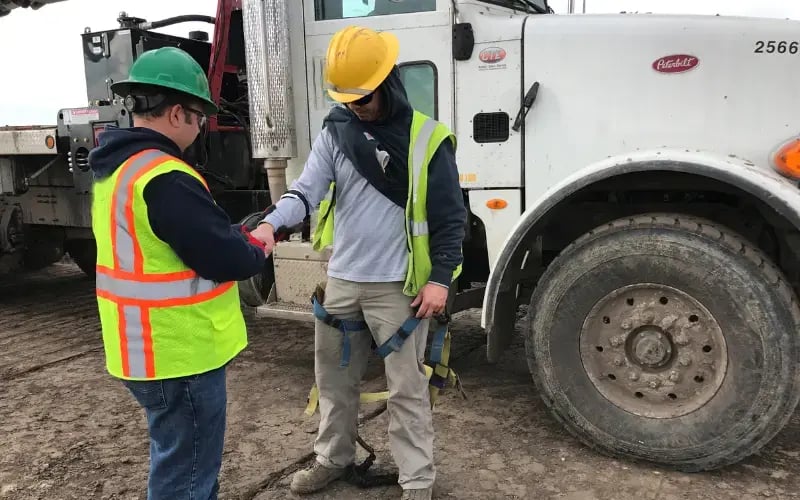
Early intervention relies on empowering employees to recognize and report signs of discomfort before they develop into injuries. Practical methods like encouraging workers to log soreness or providing simple reporting channels give employees the confidence to speak up.
Practical solutions:
- Discomfort detection: Encourage employees to log soreness or strain daily. These “small red flags” often reveal problems before they become injuries.
- Clear reporting channels: Make it easy for workers to share discomfort—whether through floor check-ins, digital forms, or suggestion systems.
- Timely investigations: Act quickly on reports. Even minor adjustments, like repositioning a monitor, can prevent claims.
Strategic solutions:
- Onsite physical therapy (PT): Having experts available for symptom-specific interventions builds responsiveness into the workflow.
- Coaching programs: Provide real-time guidance to correct posture or technique before injuries occur.
- Data reviews: Analyze incident reports and workers’ comp claims for patterns that point to underlying ergonomic risks.
This dual approach creates a culture where employees feel heard and supported, while leadership makes smarter, preventative decisions.
3. Wellness: Building Holistic Support
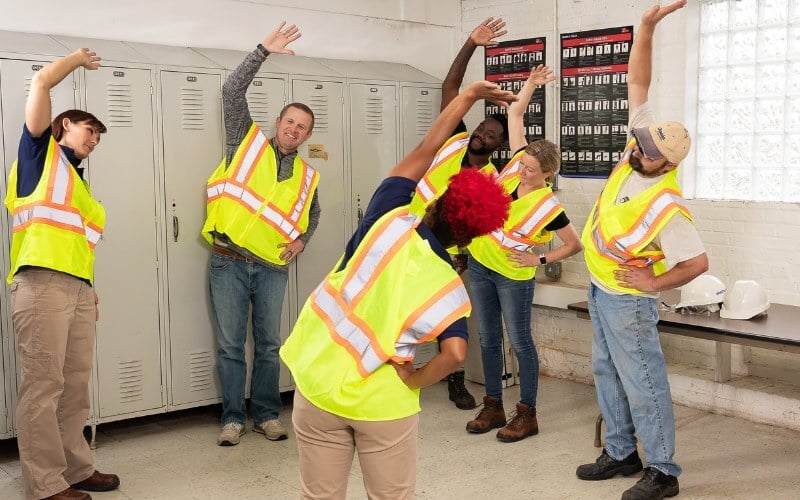
Wellness programs work best when they meet employees where they are. These low-cost efforts improve circulation, reduce fatigue, and create a visible culture of care. On a larger scale, strategic wellness solutions expand the impact through events like quarterly wellness fairs where employees can explore resources ranging from mental health support to ergonomic stipends.
Practical solutions:
- Stretch and exercise programs: Short guided sessions during shifts reduce fatigue and improve circulation.
- Microbreaks: Scheduled pauses give employees the chance to reset physically and mentally—boosting clarity and energy.
- Wellness education: Posters, emails, or in-person workshops encourage healthy habits at and outside of work.
Strategic solutions:
- Wellness events: Organize quarterly “Wellness Wednesdays” to showcase benefits like gym discounts, mental health support, or ergonomic stipends.
- Focus groups: Ask employees directly what wellness resources they value most and tailor offerings accordingly.
- Benefits liaison: Assign a representative to bridge the gap between HR programs and employee engagement.
The combination of small daily practices (like microbreaks) and strategic initiatives (like wellness events) creates a culture of care that extends beyond compliance.

4. Education and Training: Equipping Employees for Success
Education is most effective when it is tailored to both the employee and the job. These can be reinforced with performance assessments that check whether employees are applying what they have learned in real-world scenarios. Intelligent solutions then build on this foundation with role-specific coaching that addresses unique risks faced by individual workers.
Practical solutions:
- Department-specific coaching: Customize training to job tasks—lifting for warehouse staff, posture for office teams. Tailored education improves relevance and retention.
- Curriculum-based training: Standardize learning modules across departments to establish baseline safety knowledge.
- Performance assessments: Reinforce training with practical evaluations to confirm employees apply lessons on the job.
Intelligent solutions:
- Individual job coaching: Provide role-level guidance, addressing risks unique to specific employees.
- Data-informed materials: Use injury trends to design targeted educational content. For example, if wrist strain is common, introduce focused workshops on tool handling.
This layered approach ensures that education isn’t one-size-fits-all but practical, targeted, and continuously evolving.

5. Supervisory Support: Leading by Example
Supervisors play a critical role in transforming care programs from policies into practice. On the practical side, regular walkthroughs, safety meetings, and feedback systems like suggestion boxes demonstrate visible leadership commitment to safety. Even something as simple as reviewing production records can reveal repetitive tasks that create unnecessary strain.
Practical solutions:
- Walkthroughs and safety meetings: Supervisors’ visible presence reinforces that safety is everyone’s responsibility.
- Suggestion boxes: Physical or digital, these allow employees to share concerns anonymously. Simple feedback tools often surface hidden risks.
- Review production records: Look for repetitive tasks or output patterns that suggest strain.
Intelligent solutions:
- Leadership engagement: Supervisors use employee feedback to inform higher-level decisions and resource allocation.
- Strategic reporting: Turn production and suggestion data into actionable recommendations for leadership teams.
Supervisors are the bridge between programs and employees. Their active participation makes safety credible, consistent, and trusted.

6. Data-Driven Monitoring: Turning Insight Into Action
Monitoring progress is the key to sustaining safety initiatives. These activities keep teams attentive and responsive to developing issues.
Practical solutions:
- Track discomfort trends: Regularly review logs and reports to identify emerging issues.
- Conduct audits: Routine ergonomic audits validate whether practices are being applied effectively.
- Review safety data: Look at incident history to spot recurring risks.
Intelligent solutions:
- Wearable technology: Real-time monitoring tools track posture and movement, providing actionable feedback.
- Advanced assessments: Use technology-enabled evaluations to capture precise strain and workload data.
- Centralized platforms: Secure documentation systems ensure data is accessible, organized, and actionable across departments.
This mix of hands-on review and data-driven analysis shifts organizations from a reactive mindset to a proactive strategy, ensuring continuous improvement.

Putting It All Together: Practical Meets Strategic
The beauty of this framework is that you don’t need to choose between practical and intelligent solutions. A robust program blends both.
- Practical solutions build quick momentum, engage employees, and create immediate wins.
- Strategic solutions provide the depth, insights, and scalability needed for long-term success.
For example:
- A site walkthrough (practical) may uncover a workstation hazard.
- An ergonomic assessment (intelligent) then quantifies the strain and informs a tailored redesign.
The result? Employees see changes quickly while leadership gets data-driven assurance that investments are working.
Building Sustainable and Scalable Programs
Implementation is where strategy becomes culture. By applying both practical and intelligent solutions across the six pillars, you create a care program that is:
- Effective in reducing injuries and improving wellbeing.
- Sustainable by embedding safety into daily practices.
- Scalable through data and strategic insights that evolve with your workforce.
The path to productivity and quality doesn’t start with tighter deadlines or new software—it starts with care. And when you invest in both practical and intelligent solutions, you’re not just preventing injuries; you’re building a workplace where people and performance thrive together.
Do you want even more on this topic? Watch the webinar this blog is based on: Webinar Productivity Hacks: How Care Improves Quality.