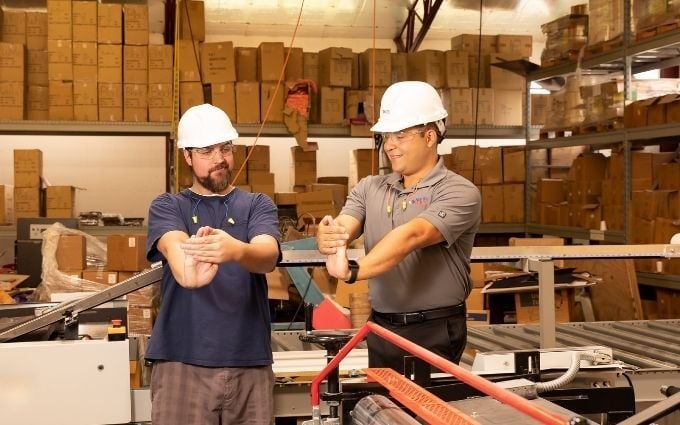
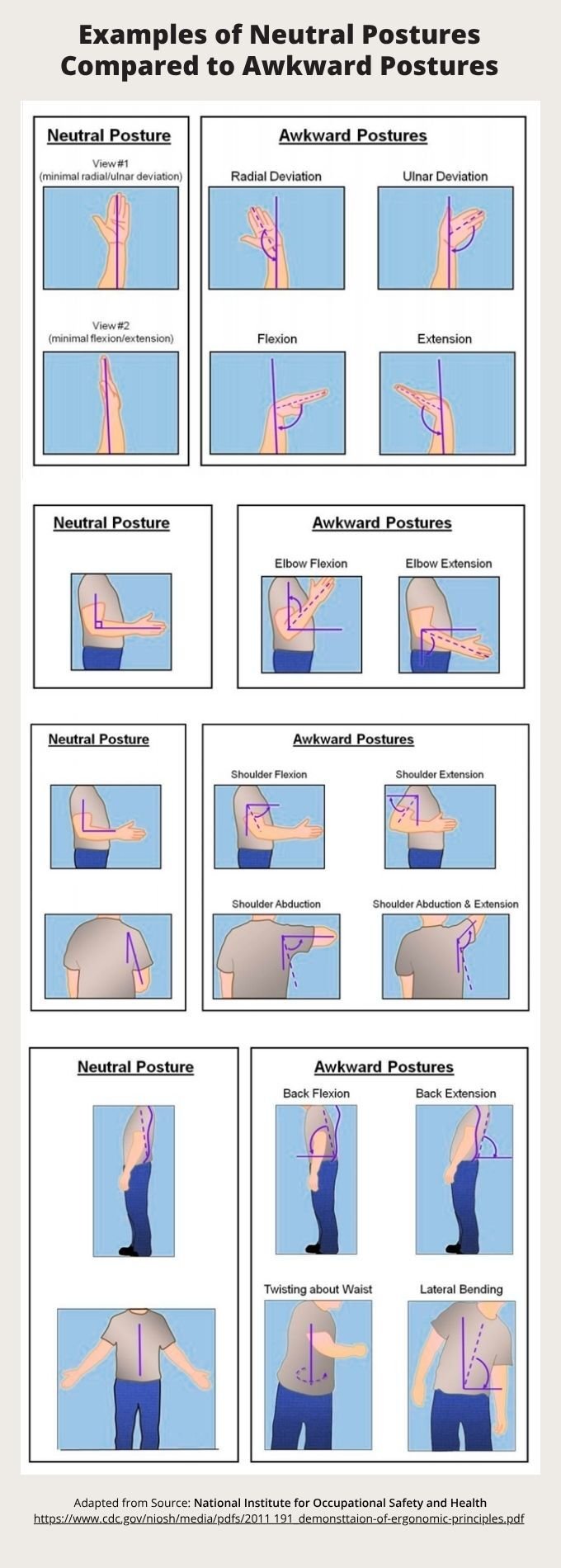
The image that comes to most people's minds when they hear the term 'neutral posture' is that of an office worker sitting at a desk using an ergonomic chair and a keyboard. Although the arrangement of the workstation is important in office settings, neutral positioning is just as important in manufacturing, warehousing, healthcare, logistics, construction, and other industries which are physically demanding.
Why Neutral Positioning Matters
Every task places some level of physical demand on the body. Problems arise when employees repeatedly work in awkward postures, such as having their wrists bent, their shoulders raised, their backs twisted, or their arms stretched out. These awkward postures increase stress on soft tissues and joints, particularly when combined with repetition, force, or long task durations.
Taking a neutral position reduces the unnecessary stress placed on the muscles, tendons, joints, and nerves. Over time, this can help reduce fatigue, enhance comfort, and reduce the risk of repetitive stress injuries, which lead to loss of productivity and workers' compensation claims.
Safety managers and injury prevention specialists consider teaching workers to keep their bodies in a neutral position when carrying out ordinary tasks to be one of the most effective methods of reducing the risk of musculoskeletal disorders (MSD). Instead of depending entirely on ergonomic equipment, effective injury prevention programs combine good workstation design, job coaching, and training in body mechanics so that employees can carry out their duties with less physical strain.
Bringing Neutral Positioning to Industrial Workplaces
Unlike office settings, industrial environments rarely involve one stationary workstation. Employees may lift materials, operate machinery, assemble products, inspect equipment, or transport loads throughout the day. This makes job coaching and body mechanics training especially important.
An effective neutral positioning program focuses on three areas:
- Workstation setup: Position materials, tools, and equipment within easy reach to reduce unnecessary bending, twisting, or reaching.
- Body mechanics training: Teach employees how to lift, push, pull, carry, and use tools while keeping joints in comfortable alignment.
- Job coaching: Reinforce proper movement patterns through regular observations and real-time coaching rather than one-time training.
These strategies help employees apply ergonomic principles regardless of the task they're performing.

Seven Principles of Neutral Positioning
Rather than viewing neutral posture as one optimal position, safety managers can teach these universal principles across nearly every job and task.
1. Keep the Head Above the Shoulders
Forward head posture increases the load on the muscles of the neck and upper back, leading to fatigue and discomfort over time. Avoid leaning the head forward or looking downward for extended periods and keep the head aligned over the shoulders to reduce strain on the neck and upper back.
When work requires looking downward, consider raising the work, repositioning materials, or changing body position to keep the neck closer to neutral alignment.
2. Keep Work Close to the Body
The farther employees reach from their bodies when lifting, pushing, or pulling, the greater the physical demand placed on the shoulders, arms, and back. Keeping loads close to the body improves leverage, reduces strain on the spine, and helps employees maintain better control during tasks.
Whenever possible, position materials and tools within easy reach to minimize extended reaches.
3. Maintain Relaxed Shoulders and Elbows
Elevated shoulders and outstretched arms increase muscle activity in the neck and upper back, which can contribute to fatigue during repetitive or sustained tasks. Employees should avoid shrugging their shoulders or holding their elbows away from the body for long periods. Ideally, the upper arms should remain close to the torso with the shoulders relaxed and elbows positioned comfortably at the sides.
When possible, adjust work heights and locations to support a more relaxed upper-body posture.
4. Keep Wrists Straight
Hands and wrists should remain aligned with the forearms whenever possible. Bent or twisted wrists increase stress on tendons and nerves, particularly during repetitive tasks or when using hand tools.
Selecting appropriately designed tools, adjusting handle positions, or repositioning the work can help maintain a more neutral wrist posture. Small adjustments can significantly reduce cumulative strain over the course of a workday.
5. Support Stable Lower Body Positioning
Uneven weight distribution, excessive reaching, or frequent twisting can reduce stability and place additional stress on the knees, hips, and lower back. Whether standing or sitting, employees should maintain balanced footing and avoid awkward twisting. Stable body positioning provides a strong foundation for safe movement throughout the workday.
Positioning work directly in front of the body whenever possible helps support balance and efficient movement throughout the task.
6. Change Body Position to Match the Work
When work cannot be performed comfortably from a standing position, employees should adjust their body in neutral positions rather than forcing the body into awkward postures. Tasks performed below knee level often lead to excessive bending at the waist, increasing strain on the lower back. In these situations, kneeling or sitting may be more effective ways to bring the body closer to the work. Choosing a working position that matches the location of the task helps reduce physical stress and supports safer, more efficient movement.
If kneeling is regularly required, provide kneeling mats or knee pads, and when possible, consider sitting as an alternative to kneeling.
7. Move Frequently
Even ideal posture becomes stressful when maintained for too long. The human body is designed for movement, and prolonged static positions can contribute to muscle fatigue, joint stiffness, and discomfort. Frequent movement helps restore circulation, reduces static loading on muscles, and supports long-term comfort and performance.
Employees should be encouraged to change positions regularly, alternate tasks when possible, and incorporate brief movement breaks throughout the day.
Neutral Positioning and Carpal Tunnel Syndrome
One area where neutral positioning has a significant impact is carpal tunnel syndrome (CTS). This common musculoskeletal disorder occurs when the median nerve passing through the wrist becomes compressed or irritated, often due to repetitive work combined with awkward wrist positions.
While neutral wrist posture alone cannot eliminate every case of CTS, maintaining straight wrists during tool use, keyboard work, assembly tasks, and material handling helps reduce unnecessary stress on the median nerve. Combined with proper tool selection, workstation adjustments, and task variation, neutral positioning is an important component of a comprehensive carpal tunnel prevention strategy.