Ergonomics
2023 Top Ergonomic Trends: Office and Hybrid Workers
Briotix Health experts discuss the top ergonomic trends for office and hybrid workers in 2023.
Boost workplace wellness with a quick 5-minute exercise band routine to improve health, productivity, and morale while reducing injury risk.
Whether employees spend most of their day seated at a desk or performing physically demanding tasks on the jobsite, regular movement is essential for maintaining health, comfort, and productivity. Prolonged sitting can contribute to muscle stiffness, reduced circulation, and increased discomfort across the body. At the same time, workers engaged in repetitive lifting, carrying, pushing, pulling, or other physically intensive activities place significant demands on their muscles and joints throughout the workday.
So, what steps can you take to address these problems? In this blog we explore an easy, equipment-focused solution that may present a new option for workplaces who are hitting obstacles in workplace wellness. Read on to learn more about exercise bands, and the 5-minute routine that could help your employees.
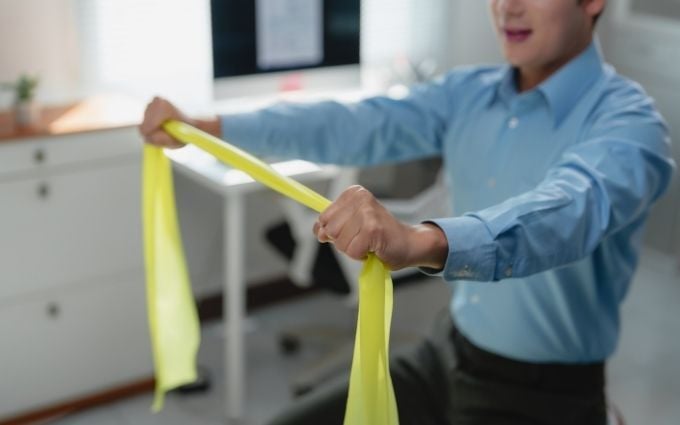
Incorporating regular exercise into the workplace can help address challenges faced by both sedentary workers and physically active ones. Movement and strengthening exercises promote circulation, improve mobility, and help activate key muscle groups that support healthy posture and movement patterns.
For physically active workers, targeted strengthening exercises can enhance stability, reinforce proper body mechanics, and better prepare the body to safely manage workplace demands.
For sedentary workers, who spend 4+ hours a day at a desk or sitting, these exercises can encourage regular movement, provide mental breaks, and improve physical wellness.
Worksite wellness programs can increase employee productivity, reduce absenteeism, improve employee morale, and even help you attract new employees. These programs start by getting employees up and active.
Often times, major recommendations for a wellness program can look like a walking club, gym memberships, or group classes. Each valuable in their own right, and easily recommended. However, some employers need a solution that can be done at a desk, in break rooms, or other areas where space could be at a premium. Workers should have access to a solution for every situation.
Exercise bands are a simple tool that employees can use anywhere. Highly portable, they can even be used by employees who are on the road often, ensuring remote and mobile employees aren’t missing out. These tools allow for small, self-contained movement options that can also be entertaining.
In just 5 minutes, employees can:

Before diving into any new workplace solution, you need to understand your workplace. Consider this action plan to determine if it is right for you.
1. Determine Accessibility and Adoption
A major obstacle for many workplace wellness programs is employee buy-in. Sometimes, a new tool can be a spark for workers to jump in, but some may be uninterested. Polling or speaking with team members and team leaders to find out what may work for them is an invaluable step to take before starting any new wellness initiative.
2. Order Your Equipment
Find the right option for the number of employees and frequency of use you expect to see. Are employees enthusiastic about active use? Maybe purchase a larger range of resistance bands for your exercise program so there is more room for growth.
3. Team Building Time
Once your equipment arrives set aside a time for your team to learn together. A 5-minute warmup before morning meetings could be used to get the team on track and energized for the day while learning the ropes together.
4. Encourage Continued Use
You and your team have learned the ropes! Now, decide on a continued cadence of team interactions or you can encourage individual practice with friendly competitions, team exercise goals, or intense challenges. Wellness is a lifelong goal, not a six-month initiative.
Reviewing your wellness plans every 3-6 months is a solid cadence for safety leaders in your organization. Are teams still using old strategies? Is there something you can do to increase participation? Or is larger change needed? Exercise bands are just one tool you can use to help prevent musculoskeletal injuries in your workforce.
It is recommended that workers get up and move at least once every hour. Workers can easily incorporate these resistance exercises once or twice a day to make sure they are activating their different muscle groups.
Workers should perform each exercise using slow, controlled movements, followed by a brief 15–30 second rest between sets. Begin with one set of 8–10 repetitions and gradually progress to 2–3 sets of 8–10 repetitions as tolerance and comfort improve. Additionally, workers can start with a light resistance band and slowly increase resistance over time.
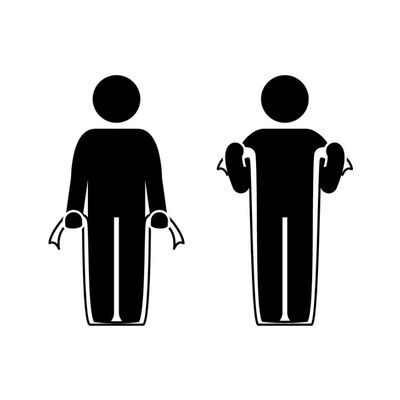
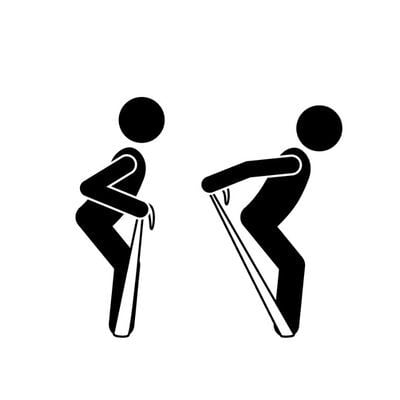
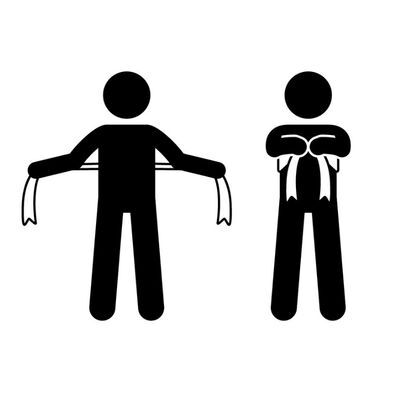
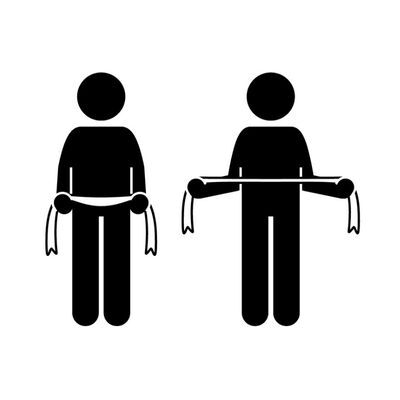
Workplace wellness programs do not have to be complicated to be effective. By incorporating regular strengthening, stretching, and movement opportunities into the workday, safety professionals can help employees maintain mobility, build resilience, and reduce the physical stresses associated with both sedentary and physically demanding jobs.
Simple initiatives such as pre-shift warmups, stretch-and-flex programs, scheduled movement breaks, and educational training on proper movement techniques can encourage participation and create a culture that values worker health. When implemented consistently, these programs support the well-being of employees no matter their age, work, or location.
Briotix Health experts discuss the top ergonomic trends for office and hybrid workers in 2023.
Discover the key factors to help identify ergonomic risks in the workplace.
We are a chair tethered society – the common problem – wake up, sit for breakfast, sit to drive to work, sit at work, sit and drive home, sit for...