Return to Work
What is the Purpose of a Job Analysis
Discover how a job analysis lays the foundation for musculoskeletal injury prevention, legally defensible hiring, return-to-work outcomes, and more.
These strategies work together to prevent injuries among new hires: job analysis, Post-Offer Employment Testing, and early intervention support.
Hiring new employees is an exciting opportunity for any organization. New hires bring fresh energy, new ideas, and the potential to strengthen workplace culture. However, they also represent one of the highest-risk groups for workplace injuries. Acute injuries can be especially prevalent versus musculoskeletal injuries, which are more likely to show up in the long term, but setting employees up for success starts from day one.
New hires are still learning job tasks, adjusting to physical demands, and becoming familiar with workplace expectations. Without the right systems in place, this learning curve can quickly lead to discomfort and ultimately injury.
With the right setup though, these injuries are highly preventable. By implementing three key strategies—thoroughly documented job analysis, Post-Offer Employment Testing (POET), and early intervention programs—organizations can significantly reduce risk, improve hiring outcomes, and create a safer work environment from day one.

A strong hiring process begins with a clear understanding of the job itself. Without this foundation, organizations risk misalignment between job expectations and employee capabilities, which can lead directly to injury.
A job analysis is the systematic process of identifying and documenting the essential functions, the physical, cognitive, and environmental demands, of a role. It answers critical questions such as:
By clearly defining these elements, employers can create accurate job descriptions and establish measurable job requirements.

One of the biggest advantages of a job analysis is that it allows organizations to expand their candidate pool without increasing risk.
At first glance, this may seem counterintuitive. However, when job requirements are clearly defined, employers can focus on the true essential functions of a role rather than relying on vague or overly restrictive criteria. This means more candidates may qualify—while still ensuring that those who are hired can safely perform the work.
For example, a job may traditionally require “heavy lifting,” but a detailed job analysis might reveal that lifting occurs only occasionally, while most tasks involve moderate force and repetitive movement. This insight allows employers to refine their hiring criteria and consider a broader range of candidates who meet the actual demands of the job.
In addition to improving hiring accuracy, job analysis provides:
Better job matching: Candidates are placed in roles that align with their abilities.
Reduced injury risk: Clear expectations prevent employees from encountering unexpected physical demands.
Improved training programs and safety: Training can be tailored to the specific demands of the job and high demand tasks can be targeted for improvement.
Legal defensibility: Documented job requirements support compliance with employment laws and reduce risk in the event of disputes.
Legal defensibility is particularly important. When hiring decisions are based on objective, documented job requirements, organizations are better protected against claims of discrimination or unfair practices. This transparency benefits both employers and employees.
A job analysis is a critical system for safety on its own, but when combined with Post-Offer Employment Testing, it supercharges your new hire safety program and is one of the most effective ways to prevent new hire injuries before they occur.
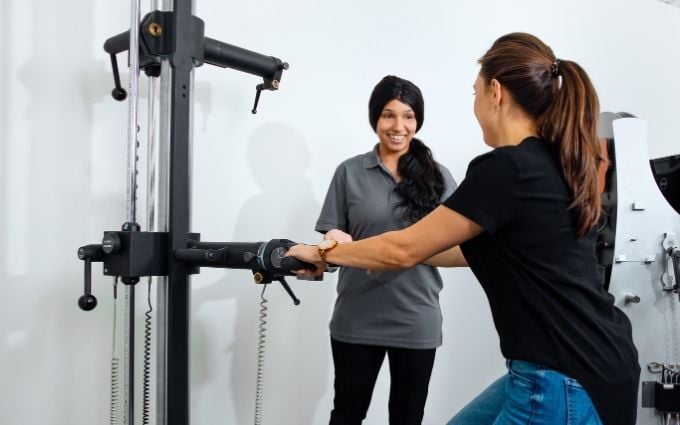
So, what is POET? One of the most effective ways to prevent new hire injuries is to ensure that employees are physically capable of performing the job before they even start. This is where Post-Offer Employment Testing (POET) becomes a critical tool.
POET is a series of physical abilities tests based on job demands that are conducted after a conditional job offer is made. It evaluates whether a candidate can safely perform the essential functions of a role. These tests are designed to mirror real job tasks, such as lifting, carrying, pushing, pulling, pinching and gripping, or maintaining certain postures for extended periods.
The goal of POET is not to exclude candidates unnecessarily—it is to ensure alignment between the worker’s capabilities and the job’s demands.
When implemented correctly, POET provides several key benefits:
Improved candidate quality: Employers gain confidence that new hires can safely perform the physical demands of the job.
Reduced injury risk: Employees who can safely perform required tasks are less likely to experience strain or overexertion injuries.
Lower turnover: When employees are placed in roles that match their abilities, they are more likely to succeed and stay.
Objective hiring decisions: POET uses measurable data, reducing reliance on subjective judgment.
For example, if a job requires lifting 50 pounds repeatedly throughout a shift, POET ensures that the candidate can safely perform that task.
It is important to note that POET must be based on accurate job demands. If the testing does not reflect real job tasks, it loses its effectiveness and legal defensibility. POET does not work without knowing the real, objective requirements of the job, which is why it must be paired with a job analysis. Testing that isn’t based on the concrete findings from a job analysis serves no real purpose for creating a safer workplace.
Ultimately, POET helps organizations build a workforce that is prepared, capable, and set up for success from the very beginning.
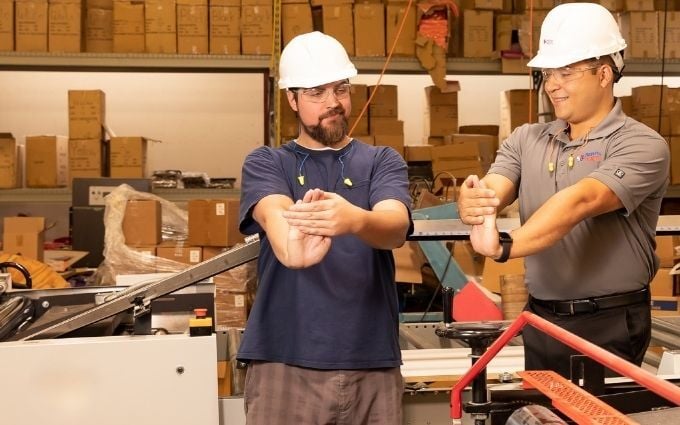
Even with the best hiring practices in place, new employees will still face a learning curve. Their bodies are adapting to new movements, new environments, and new workloads. This is why the third strategy—early intervention—is essential.
A discomfort reduction and early intervention program focuses on identifying and addressing minor issues before they become serious injuries. Instead of waiting for an injury to be reported, these programs encourage proactive communication and timely support.
New hires are especially vulnerable to discomfort during their first few weeks. They may experience soreness, fatigue, or minor strain as they adjust to their roles. Without proper support, these small issues can quickly escalate into recordable injuries.
An effective early intervention program includes:
Open communication channels: Employees are encouraged to report discomfort early without fear of consequences.
Education on body mechanics: Employees learn proper movement techniques specific to their job tasks.
Ongoing monitoring: Regular check-ins help identify trends and prevent recurring issues.
One of the key benefits of early intervention is that it shifts the focus from reactive to proactive care. Instead of responding to injuries after they occur, organizations can prevent them by addressing the root causes of discomfort.
Early intervention programs also contribute to a stronger safety culture. When employees see that their well-being is a priority, they are more likely to engage in safe behaviors and communicate openly about risks.
Additionally, these programs can lead to:
By addressing discomfort early, organizations not only protect their employees but also reduce long-term costs and disruptions.
A rigorous job analysis process provides a clear understanding of job demands and improves hiring accuracy while expanding the candidate pool. Post-Offer Employment Testing ensures that employees have the physical ability to perform their jobs safely. Discomfort reduction and early intervention programs support employees as they adapt, preventing minor issues from becoming serious injuries.
Together, these three strategies create a comprehensive system that supports employees from the moment they are hired through their transition into the workplace.
Discover how a job analysis lays the foundation for musculoskeletal injury prevention, legally defensible hiring, return-to-work outcomes, and more.
Discover how to reduce office discomfort through ergonomics, regular stretching, and microbreaks, improving productivity and employee well-being.
Discover how Fit-for-Duty testing improves workplace safety and supports return-to-work processes by evaluating employees' readiness against job...