Ergonomics
The Guide Identify Ergonomic Risk Factors in the Workplace
Discover the key factors to help identify ergonomic risks in the workplace.
Discover how AI assessment tools are accelerating safety programs and helping organizations plan more effective risk reduction solutions.
Industrial workplaces have always faced a balancing act between productivity, employee health, and operational costs. As demands increase and labor markets evolve, companies feel the need to do more with less, while continuing to improve safety. The introduction and rise of industrial ergonomics software has been a bright spot in this continuing struggle. These tools are reshaping how organizations approach safety, offering new opportunities to reduce injuries and generate measurable cost savings.
Ergonomic software bridges the gap between data, training, and real-world application. It provides organizations with a scalable, accessible way to evaluate job demands, identify risk factors, reduce workloads, and implement improvements. These software solutions are becoming swiss army knives for the workplace with a wide range of features that can be used to accelerate ergonomics programs. In this blog we will examine different industrial ergonomics software features and how they can impact your program success.
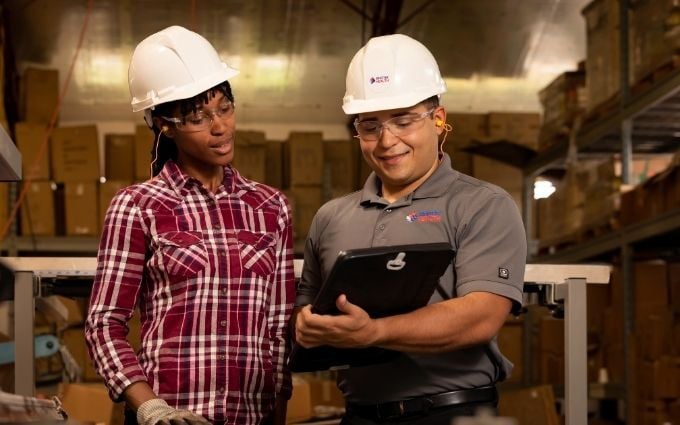
Any successful safety program starts with a well‑informed safety person or team that is aligned and speaking the same language when it comes to ergonomics. Virtual ergonomic assessment platforms can be integrated with training courses and materials to deliver continuous, on-demand training wherever it is needed by safety employees.
Unlike traditional training models that rely on scheduled sessions or one-time onboarding, virtual platforms allow employees to access learning modules at any time. Workers can continuously learn about ergonomics best practices and how to improve ergonomics in their workplace as safety leaders.
This consistent reinforcement is critical. Safety concepts require repetition and application to become habits. On-demand training supports skill development over time, helping employees internalize best practices and apply them naturally in their daily tasks.
Virtual ergonomic tools play a key role in reinforcing a culture of safety by promoting visibility, accessibility, and actionable steps. They empower a safety leader, whether that be a team of safety experts or a supervisor, to easily manage and improve a safety program.
When employees can actively participate in assessments, such as recording their own tasks or completing guided evaluations, they become more engaged in the process. This participation fosters ownership, turning safety from a top-down directive into a shared responsibility. A designated safety officer on each team could work with your safety lead to create a company-wide safety network, with information all held on a single platform.
One of the most transformative aspects of virtual ergonomic software is its integration of classic assessments and new advanced technologies. These tools go beyond basic checklists, offering comprehensive solutions that combine data capture, analysis, and actionable insights.
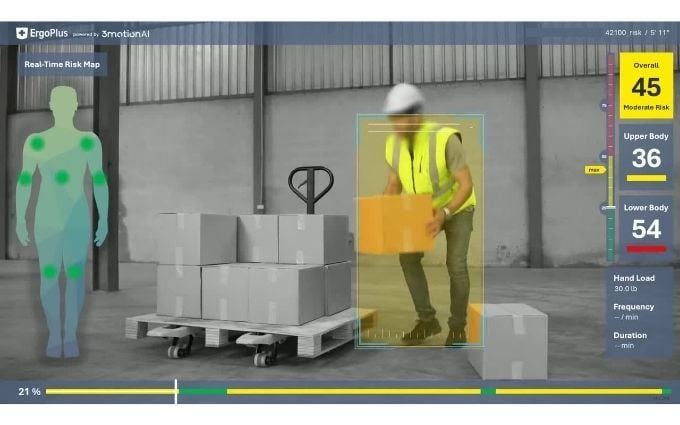 ^ Image from ErgoPlus Industrial computer vision risk assessment.
1. Video Capture to Assess and Analyze Ergonomic Risk
Modern platforms allow users to record job tasks using standard devices such as smartphones or tablets. These videos can then be analyzed with specially built AI programs to identify ergonomic risks, such as awkward postures, repetitive motions, or excessive force.
Video capture enhances the work of on-site specialists, making assessments more efficient and cost-effective. It also provides a visual record that can be revisited for training, coaching, and continuous improvement.
2. Routine Ergonomic Analysis
With federal regulations, stakeholder requests, and local laws to consider, the need for an established and reliable assessment software is vital. Ergonomic software can easily categorize and incorporate evidence-based assessment tools to evaluate tasks or to use as resources. Tools such as:
With access to these tools, software programs can also accelerate the assessment process, enabling faster decision-making.
3. Quick Calculations and Decision Support
In addition to comprehensive assessments, many platforms include useful calculation tools (e.g. a lifting calculator) that allow users to preemptively evaluate specific tasks in real time. These features are particularly valuable on the floor, where supervisors and employees may need guidance to implement stop-gap solutions.
Collecting data is only valuable if it can be used effectively. Virtual ergonomic software excels in this area by centralizing risk assessment results alongside tools to address them. The best ergonomics software platforms make it easy to assess real-time risk, plan and execute improvement projects, track progress towards goals, and analyze trends over time.
1. Taking Action: Plan Ergonomic Improvement Projects
Through machine learning algorithms and the combined knowledge of hundreds of ergonomic experts, ergonomic software can now recommend risk reduction strategies tailored to specific job tasks. Advanced ergonomic software can even quantify the value of proposed solutions with “what-if” analysis, allowing safety managers to test different risk reduction strategies before implementation. Using these programs in tandem with an expert can accelerate your planning timelines and get you right to implementation.
The ErgoPlus Industrial software platform allows organizations to add their own solutions library. This customizable library stores risk reduction solutions that your organization has approved so safety managers can quickly find proven methods to address organization-specific risks.
2. Tracking Progress
By linking ergonomic assessment data and improvement initiatives in one software platform, organizations can benefit from automatic progress tracking and robust reporting features. Customizable dashboards keep stakeholders informed in real-time, giving your teams the information that matters to them.
3. Planning for the Future
With this data, safety teams can move from reactive to proactive strategies. Instead of responding to injuries after they occur, organizations can identify patterns and address risks before they lead to incidents with predictive models included in modern software.
Planning for the future becomes more strategic as well. For example, if data shows a recurring issue with a specific task, companies can redesign workflows, invest in equipment, or enhance training programs to mitigate the risk.
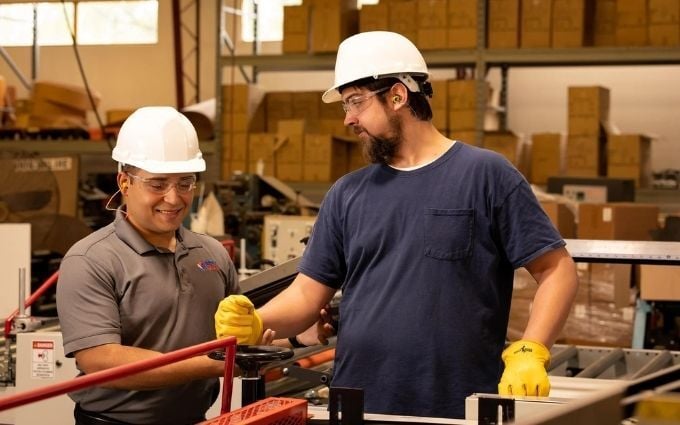
One of the most compelling advantages of ergonomics management software is its scalability. Traditional ergonomics programs may struggle to expand beyond a single location due to resource constraints like workers or busy ergonomists. Technology solutions remove these barriers.
A single platform can be deployed across an entire organization, from individual employees to multiple facilities. This scalability offers several key benefits:
For organizations with multiple sites, this means safety initiatives can be rolled out quickly and uniformly. Best practices identified in one location can be shared and implemented across others, amplifying their impact.
Even for smaller operations, scalability is valuable. Companies can start with a focused program and expand as needed, without requiring significant additional investment.
While the primary goal of ergonomic programs is to protect employees, the financial benefits to the organization are significant. Industrial ergonomics software accelerates program success, which contributes to cost savings in several ways:
Ergonomics programs actively reduce the number of MSD-related injuries companies experience, year-over-year, even outright eliminating them in some cases.
As technology continues to evolve, the capabilities of ergonomics software will only expand. Integration with wearable devices, artificial intelligence, and predictive analytics will further enhance the ability to quickly identify risks, plan risk reduction improvements, and optimize workforce performance.
However, the true value of these tools lies not just in their features, but in how they are used. Virtual ergonomic solutions can’t replace human expertise. But they can aid safety professionals, providing easy-to-use tools and suggesting practical changes in the workplace. With these tools anyone can do more than is possible alone. They enable safety professionals to work more efficiently, reach more employees, and make more informed decisions.
Companies that invest in these solutions early stand to gain the most, positioning themselves for long-term success in an increasingly competitive landscape.

Discover the key factors to help identify ergonomic risks in the workplace.
Explore what every HR manager, CEO, and Safety Manager should be asking for better on-site injury prevention and a healthier, more productive...
Learn how to implement effective ergonomics in manufacturing settings by following these best practices.