Discover how Post-Offer Employment Testing removes bias from hiring decisions and protects employees and employers from workplace injuries.
Hiring the right employee involves more than evaluating experience, qualifications, and cultural fit. Employers also need to understand whether candidates can safely and consistently perform the physical demands of a position. When a job involves lifting, carrying, pushing, pulling, or other physical requirements, assumptions about an individual's capabilities can create unnecessary risks for both the employee and the organization.
Post-Offer Employment Testing (POET) provides a practical way to address these concerns. By using objective, job-specific testing methods, employers can make more informed hiring decisions while supporting workplace safety and legal defensibility.
What Is a Post-Offer Employment Test?
A post-offer employment test is a functional assessment conducted after a conditional job offer has been made. The test evaluates whether a candidate can safely meet the essential physical demands of the position.
Rather than relying on a candidate's self-reported abilities, medical history, or general fitness level, POET measures functional capabilities against the actual requirements of a job.
POET provides a reliable and objective assessment of candidates' functional abilities, helping employers identify potential risk factors that could lead to injury or underperformance.
These assessments typically evaluate activities such as lifting, carrying, bending, reaching, and other movements that reflect the physical demands of the position. The goal is to determine whether candidates can meet those demands safely and consistently.
Why Objective Testing Methods Matter
For a post-offer physical abilities test to be effective and legally defensible, testing must be based on objective, measurable criteria. Employers need to understand what a position requires and establish testing standards that accurately reflect those requirements.
Without objective testing, hiring decisions can become subjective. A candidate's appearance, perceived fitness, age, or personal statements about physical ability should not determine whether they are capable of performing a job.
Objective testing replaces assumptions with measurable results. Each candidate is evaluated against the same established physical requirements, creating a consistent process that helps employers make fair and informed decisions.
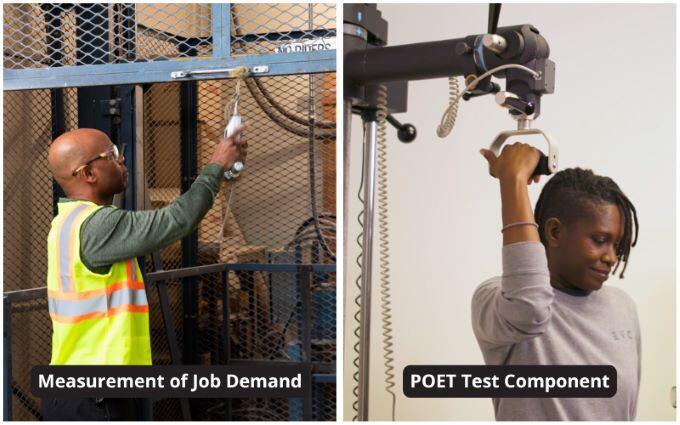
Just as importantly, testing should reflect the actual work employees will perform. If a position requires lifting 40 pounds throughout a shift, the assessment should evaluate that specific capability under appropriate testing conditions. A test that evaluates physical abilities unrelated to the position may introduce unnecessary barriers and create potential legal concerns.
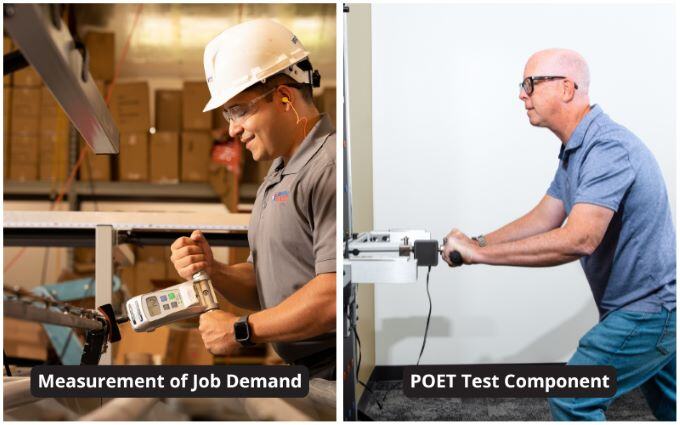
This connection between physical abilities testing and essential job functions is central to legal defensibility. Employers should be able to demonstrate why a particular physical requirement exists, how it relates to the position, and how the testing method accurately measures that requirement.
POET programs should also be designed and administered in accordance with applicable employment laws, including the Americans with Disabilities Act (ADA). Employers should work with qualified professionals and legal counsel to ensure testing procedures, accommodation practices, and employment decisions comply with relevant requirements.
Protecting Employers and Employees Through Better Hiring Decisions
Legally defensible testing benefits more than an organization's hiring process. It also helps protect employees from being placed in situations where they may struggle to meet physical demands or face an increased risk of injury.
When employees enter positions that exceed their functional capabilities, they may experience unnecessary physical strain, discomfort, or musculoskeletal injuries. These outcomes can affect employee wellbeing, productivity, retention, and workers' compensation costs.
POET helps identify potential mismatches before an employee begins performing the job. Objective results give employers a clearer understanding of whether a candidate can meet established requirements and provide an opportunity to address potential limitations before they become workplace safety concerns.
POET documentation also creates a defensible record of the hiring process. Employers can demonstrate that decisions were based on job-related criteria rather than personal assumptions or inconsistent evaluations.
What Happens When a Candidate Does Not Pass?
A candidate who does not meet a position's physical requirements does not necessarily represent a failed hiring opportunity. POET results can help employers identify alternative paths that support both workforce needs and employee development.
For example, candidates who fall short of certain physical requirements may benefit from targeted strength, conditioning, or functional training programs. With appropriate professional guidance, these programs can help individuals develop the capabilities needed to perform specific job tasks safely.
Another option is exploring alternative positions within the organization. A candidate who cannot meet the physical demands of one role may be fully capable of performing another position with different requirements.
Employers should also consider whether reasonable accommodation is appropriate under applicable law before making an employment decision. A test result alone should not automatically disqualify a candidate without considering the circumstances and relevant legal obligations.
Ultimately, POET is not simply a pass-or-fail hiring tool. It is an opportunity to better understand the relationship between employee capabilities and workplace demands.
Building a Safer, More Defensible Hiring Process
Effective hiring practices should protect the organization without creating unnecessary barriers for qualified candidates. Legally defensible POET programs help accomplish this by establishing objective, job-specific standards that prioritize both workplace safety and fair employment practices.
When employers understand the physical requirements of their positions and evaluate candidates against those requirements, they can make better-informed decisions, reduce potential injury risks, and build a workforce better prepared to meet the demands of the job.