Workplace injuries impact more than just the individual employee who gets hurt. Productivity suffers, overtime expenses increase, and your teams are faced with heightened stress and workload demands.
Meanwhile, your injured employees are stuck out of the workplace, experiencing physical discomfort and uncertainty about the possibility of returning to their jobs. So what do we do?
For employers, one of the primary goals after an injury in the workplace is helping employees recover and return to work. A well-structured return-to-work program supported by physical therapy can improve the outcomes of an injury for both employees and organizations.
With the right program, physical therapy can help injured workers recover function and mobility, lowers the risk of re-injury, and accelerate a safe return to work, getting your workplace back to top shape right away.
Why Returning to Work Quickly Matters
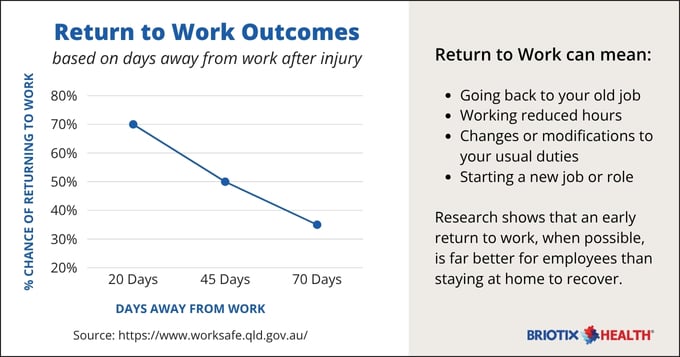
Extended time away from work can negatively affect recovery. Research consistently shows that the longer an employee stays out of work, the more difficult it becomes to return successfully.
Commonly cited estimates suggest that the probability an injured employee will return to their job drops significantly after about 4–10 weeks (Royal Australasian College of Physicians (RACP)).
Physical deconditioning, disrupted routines, fear of re-injury, and diminished confidence can all delay recovery.
Work also plays an important role in a person's identity and psychological health. Employees often want to regain their independence, contribute to their team, and support their families. A supportive return-to-work process demonstrates that an employer values employee health and recovery, which can strengthen trust and improve job satisfaction.
When companies respond quickly and effectively after an injury, employees are more likely to continue to engage in the recovery process. Co-workers also notice how injuries are handled, which can influence the workplace culture, morale, and perceptions of management support.
The Role of Physical Therapy in Workplace Injury Recovery
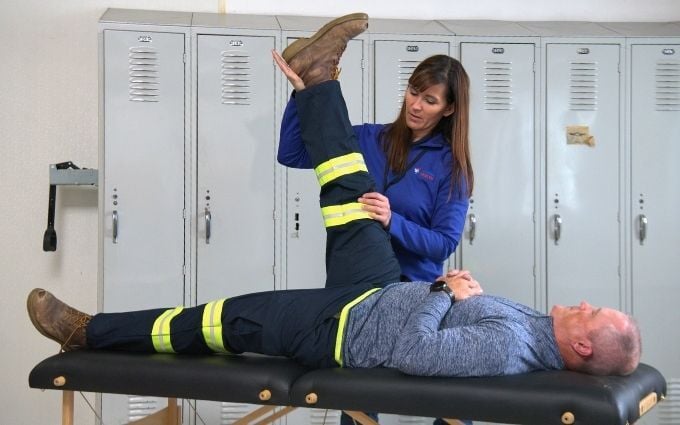
Physical therapy is one of the most effective tools available for helping injured employees return to work safely and efficiently. Physical therapists restore movement, strength, flexibility, endurance, and physical function so employees can meet the demands of their jobs.
A comprehensive physical therapy program targets several critical recovery areas:
1. Restoring Strength and Mobility
Most workplace injuries involve strains, sprains, repetitive stress injuries, or musculoskeletal discomfort. Physical therapists create customized treatment plans to improve mobility and rebuild strength, tailored to each employee’s specific condition and job duties.
This individualized approach helps employees regain the physical capabilities needed for lifting, standing, reaching, walking, or performing repetitive tasks safely.
2. Improving Flexibility and Movement Patterns
Restricted mobility and poor movement mechanics increase the risk of future injuries. Physical therapists help employees improve flexibility and movement efficiency while also identifying harmful movement habits that may contribute to their discomfort.
By improving body mechanics and posture, employees can perform job tasks with less strain on muscles and joints.
3. Reducing Pain Without Prolonged Inactivity
A common misconception in injury recovery is that complete rest is always best. In many cases, guided movement and therapeutic exercise are essential for recovery.
Physical therapy keeps employees active within safe limits as they progress toward functional goals. This active recovery process often helps reduce pain, improve circulation, and accelerate healing.
Why Early Intervention Is So Important
Early care leads to better recovery outcomes. Early physical therapy intervention can prevent a minor injury from becoming a long-term issue and may reduce workers’ compensation costs.
In a study of 83,000+ work-related injuries, patients who started PT within 0–2 days after injury had shorter case duration and needed fewer therapy visits overall.
Treatment delays enable pain patterns, compensation behaviors, and avoidance to develop, complicating recovery. Early assessment finds functional limits before they escalate.
Many organizations now incorporate onsite physical therapy services or early ergonomic intervention programs to improve response times and provide immediate support.
The Benefits of Onsite Physical Therapy
Onsite physical therapy programs are increasingly valuable in industrial, manufacturing, warehouse, and office settings. Bringing therapy directly into the workplace allows therapists to better understand the physical demands employees face each day. A therapist with job-specific knowledge can craft return-to-work treatment plans that minimize lost or modified workdays while keeping employees safe from reinjury.
This approach offers several advantages:
1. Enhanced Education
Physical therapists provide education that helps employees reduce future injury risks. When the therapist is familiar with the work environment and job role, they are able to provide more relevant and effective education. This may include training on:
- Proper body mechanics
- Safe lifting techniques
- Stretching and mobility exercises
- Ergonomic best practices
- Task modification strategies
Education empowers employees to recognize early warning signs of discomfort and make safer movement decisions throughout the workday. When your onsite PT knows the work and knows the worker they can focus on functional training towards specific work-related tasks
2. Improved Communication
On-site therapists work directly with management, supervisors, and safety teams. This communication helps ensure that modified duty assignments, transitional work tasks, and physical restrictions align with each employee’s recovery status.
Better communication often leads to smoother return-to-work transitions and fewer misunderstandings. An onsite PT can work with employers to identify tasks throughout the site that are within employees restrictions as well.
3. Reduced Re-Injury Risks
Returning employees prematurely, before restoring function, increases the risk of injury. On-site therapists specialize in functional readiness for job tasks as well as supporting a modified duties return-to-work plan.
Therapists evaluate strength, endurance, balance, mobility, and movement quality to determine whether employees can tolerate job demands safely. They can also identify existing risk factors that may contribute to repeated injuries. This additional coaching and observation from a professional can identify problem areas right away.
When employees feel physically prepared and confident in their abilities, they are more likely to return to work quickly, remain productive, and avoid re-injury.
Building a Stronger Workplace Culture Through Recovery Support
Employees pay close attention to how organizations respond after an injury occurs. Companies that prioritize employee recovery, provide timely care, and support safe return-to-work processes often foster stronger workplace cultures.
A proactive injury management strategy, backed by physical therapy, signals a commitment to employee well-being. This lifts morale, builds trust, and cements a culture of safety.
Ultimately, investing in physical therapy and return-to-work support benefits everyone involved — injured employees, co-workers, supervisors, and the organization as a whole.
Frequently Asked Questions