Workplace safety is about more than preventing accidents and responding to injuries. As employers face labor shortages, an aging workforce, rising workers’ compensation costs, and increasing challenges with employee retention, organizations must take a more comprehensive approach to workforce health. Keeping employees safe and productive requires understanding not only the physical demands of their jobs but also their overall health, readiness, and ability to perform those jobs over time.
The following article recaps the recent webinar presented by Kris Corbett, Senior Solutions Advisor at Briotix Health, exploring the changing state of workplace injuries and the importance of Total Worker Health™. Read on to examine current injury trends, the connection between worker health and workplace safety, and how employers can move beyond reactive injury management to build healthier, more sustainable workforces.
For more on this topic, watch the complete 60-minute webinar here.
Understanding Today's Workplace Injury Trends
Workplace injuries continue to create significant challenges for employers, particularly in physically demanding industries. Understanding who is getting injured, what is causing those injuries, and how much they cost can help organizations develop more effective injury prevention strategies.
The 2026 Travelers Injury Impact Report highlights several important trends:
- Falls, slips, and trips: These incidents remain among the most costly workplace injury categories, with an average claim cost of $57,314. Employees injured in these incidents miss an average of 83 workdays.
- Motor vehicle accidents: These injuries carry an average claim cost of $93,105, making them one of the most expensive injury categories.
- Caught-in and caught-between incidents: These injuries have an average claim cost of $51,719.
- Overexertion: Accounting for about 31% of workplace injury claims, overexertion remains a leading cause of workplace injuries.
Musculoskeletal injuries (MSDs), especially those that involve the shoulders, lower back, and knees, continue to contribute to lost workdays and workers' compensation expenses. With an average workers' compensation claim cost of $50,076 and employees missing approximately 80 workdays following an injury, the financial and operational consequences can be substantial.
However, injury frequency is only part of the picture. Employers must also consider which employees are most vulnerable and how workforce demographics are changing.
Addressing Employee Health: The Aging Workforce and First-Year Employee Risks
Two workforce groups deserve particular attention: older employees and workers in their first year on the job.
Employees ages 35 to 49 account for the largest share of workplace injury claims. However, older employees tend to generate higher claim costs because injuries can become more complex, recovery periods are longer, and medical expenses increase.
Workers aged 60 and older account for 16% of lost-time claims and average 97 days of recovery following an injury. They also miss approximately 17 more workdays than the average injured employee.
With employment among workers aged 65 and older increasing significantly over the past two decades, employers must consider how to support employees throughout longer careers. Ergonomic improvements, physical conditioning, and proactive injury prevention can help employees continue performing their jobs safely.
At the same time, newer employees face a different set of challenges. Corbett highlights that 37% of workplace injuries occur during an employee's first year on the job, resulting in more than five million missed workdays.
This demonstrates that injury risk is not determined by age alone. Job familiarity, training, physical readiness, and understanding proper body mechanics all influence an employee's ability to work safely.
Effective onboarding should therefore include more than task instructions and general safety training. Employees need job-specific education, coaching, and support as they become familiar with the physical demands of their positions.
Worker Health Directly Impacts Workplace Safety
The connection between overall worker health and workplace injury risk cannot be ignored either.
Physical readiness, chronic health conditions, stress, fatigue, and attentiveness can all influence how employees respond to workplace demands. CDC data indicates that approximately 76% of U.S. adults have at least one chronic health condition, while more than half report multiple chronic conditions.
Factors such as physical inactivity, poor nutrition, tobacco use, excessive alcohol consumption, stress, and depression can affect an employee's overall health and readiness for work.
These challenges can also lead to reduced mobility, fatigue, slower recovery, and difficulty performing physically demanding tasks.
Employers should recognize that workplace safety does not exist independently of employee health. A worker who is fatigued, physically unprepared, or struggling with chronic discomfort may have greater difficulty maintaining proper body mechanics and situational awareness.
This is where the concept of Total Worker Health becomes important.
Total Worker Health integrates protection from workplace safety and health hazards with wider efforts to prevent injury and illness and support worker well-being. Rather than treating safety, wellness, and injury prevention as separate initiatives, this approach brings them together to support the whole worker.
Moving From Reactive Safety to Proactive Workplace Injury Prevention
Traditional workplace safety programs often focus on responding to injuries after they occur. Organizations investigate incidents, manage workers' compensation claims, provide return-to-work support, and deliver periodic safety training.
While these activities are still important, leading organizations have recognized the value of preventing injuries before they happen.
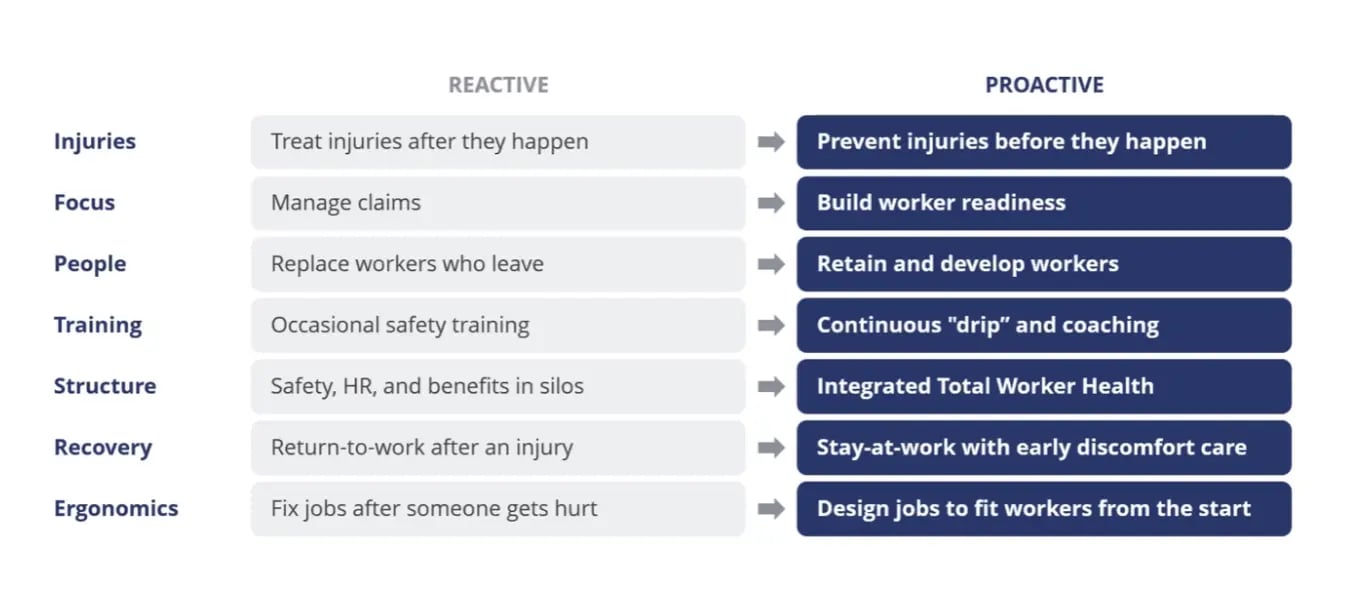
This shift is especially important when considering workforce retention.
Employees experiencing chronic pain, physical wear and tear, burnout, or limited support from supervisors may eventually leave their positions. When organizations struggle with labor shortages and high turnover, replacing experienced employees adds recruiting, onboarding, and training costs.
Coaching for MSK Prevention
A key component of the Briotix Health approach is Industrial Sports Medicine and the development of Working Athletes™.
Much like professional athletes prepare their bodies for competition, employees in physically demanding positions need to prepare for the physical requirements of their jobs.
Building an industrial athlete involves improving strength, endurance, mobility, and resilience while helping employees understand how to move safely throughout their workday.
This can include:
- Job-specific coaching: Teaching proper body mechanics, positioning, posture, and injury prevention techniques.
- Training and education: Providing curriculum-based instruction, monthly health topics, and injury prevention awareness.
- Physical conditioning: Incorporating personalized programs, stretching guidance, and provider-led group warm-ups.
- Early discomfort management: Identifying discomfort through screenings and providing appropriate early intervention and recovery support.
However, providing information alone does not guarantee employees will change their behaviors.
To make a measurable impact, you need to leverage the science of behavior change. Employees move through different stages, from not recognizing a problem to considering a change, preparing to act, adopting new behaviors, and eventually sustaining those behaviors as habits.
Successful programs account for employee readiness, potential barriers, and the likelihood of returning to previous habits.
This requires personal engagement, education, and consistent coaching. Instead of simply telling employees what to do, organizations should help them understand why a change matters and how it benefits them.
Leadership support and regular reinforcement also help turn safe behaviors into everyday habits.
Supporting Employee Health for a Lifetime
Building a sustainable workforce requires a long-term approach to employee health and safety. A “Lifetime of Care” framework sets out several connected steps:
- Hire the right worker: Use physical demands analyses, Post-Offer Employment Testing (POET), and functional evaluations to understand job requirements and worker readiness.
- Prepare the worker: Provide appropriate training and education before employees begin performing demanding tasks.
- Design work to fit the worker: Use ergonomic assessments and workplace improvements to reduce force, repetition, and awkward postures.
- Build industrial athletes: Develop strength, mobility, endurance, and physical resilience.
- Support health and well-being: Address factors that influence overall health and workplace readiness like routine physicals, wellness programming, and more.
- Prevent and manage injuries: Identify discomfort early and provide appropriate intervention.
- Keep employees working: Support effective return-to-work and stay-at-work solutions.
- Measure and improve: Evaluate outcomes and use performance data to strengthen injury prevention efforts continually.
Building a Healthier, More Sustainable Workforce
Workplace injury prevention requires more than responding to incidents and managing claims. Employers must understand how job demands, worker readiness, physical health, and employee behavior relate.
Organizations that invest in proactive ergonomics, early intervention, job-specific coaching, and comprehensive worker health initiatives can better reduce injury risk while supporting productivity and retention.
Want more on Total Worker Health™ and retention strategies? Watch the 60-minute webinar with Kris Corbett on-demand.